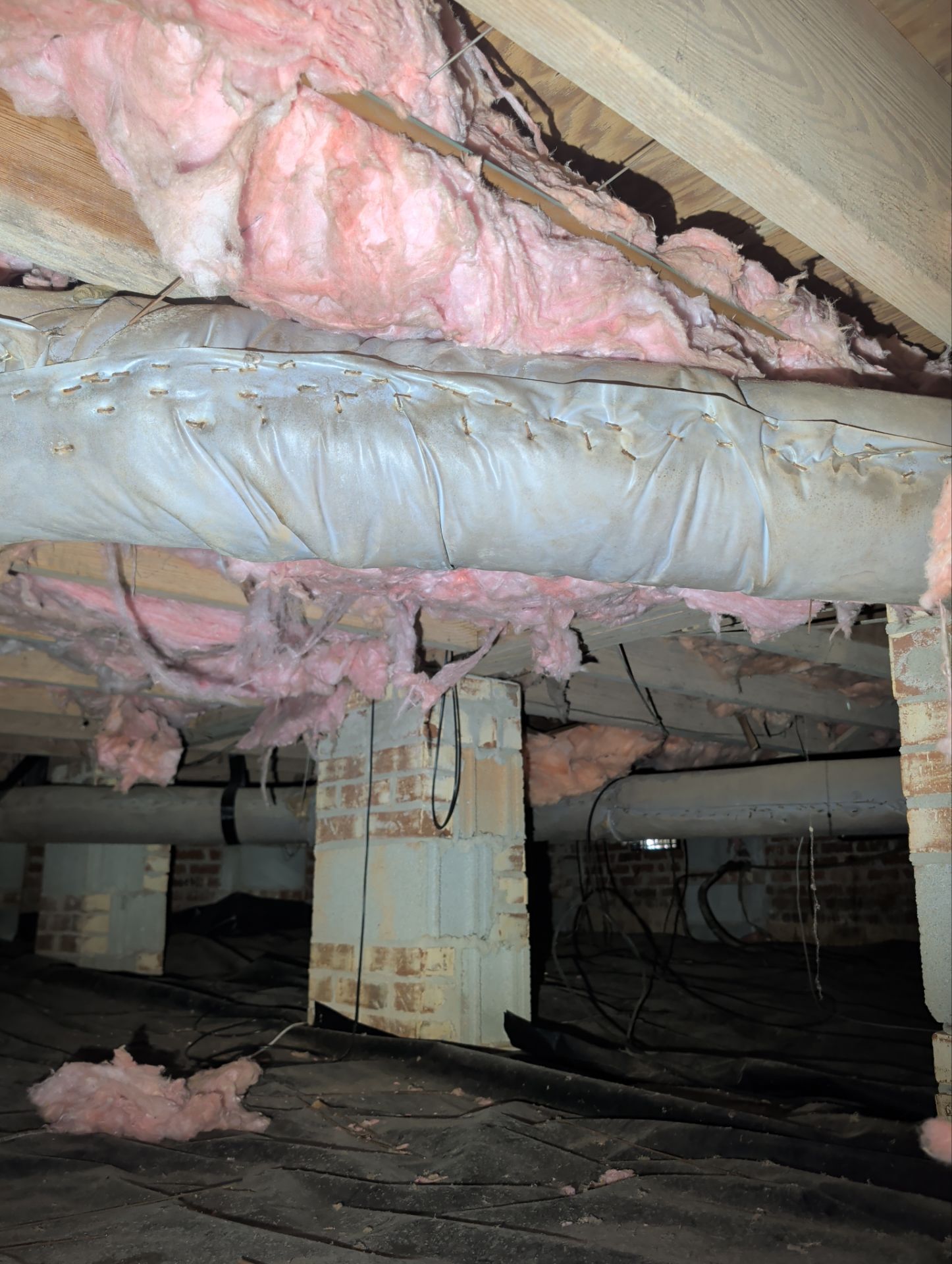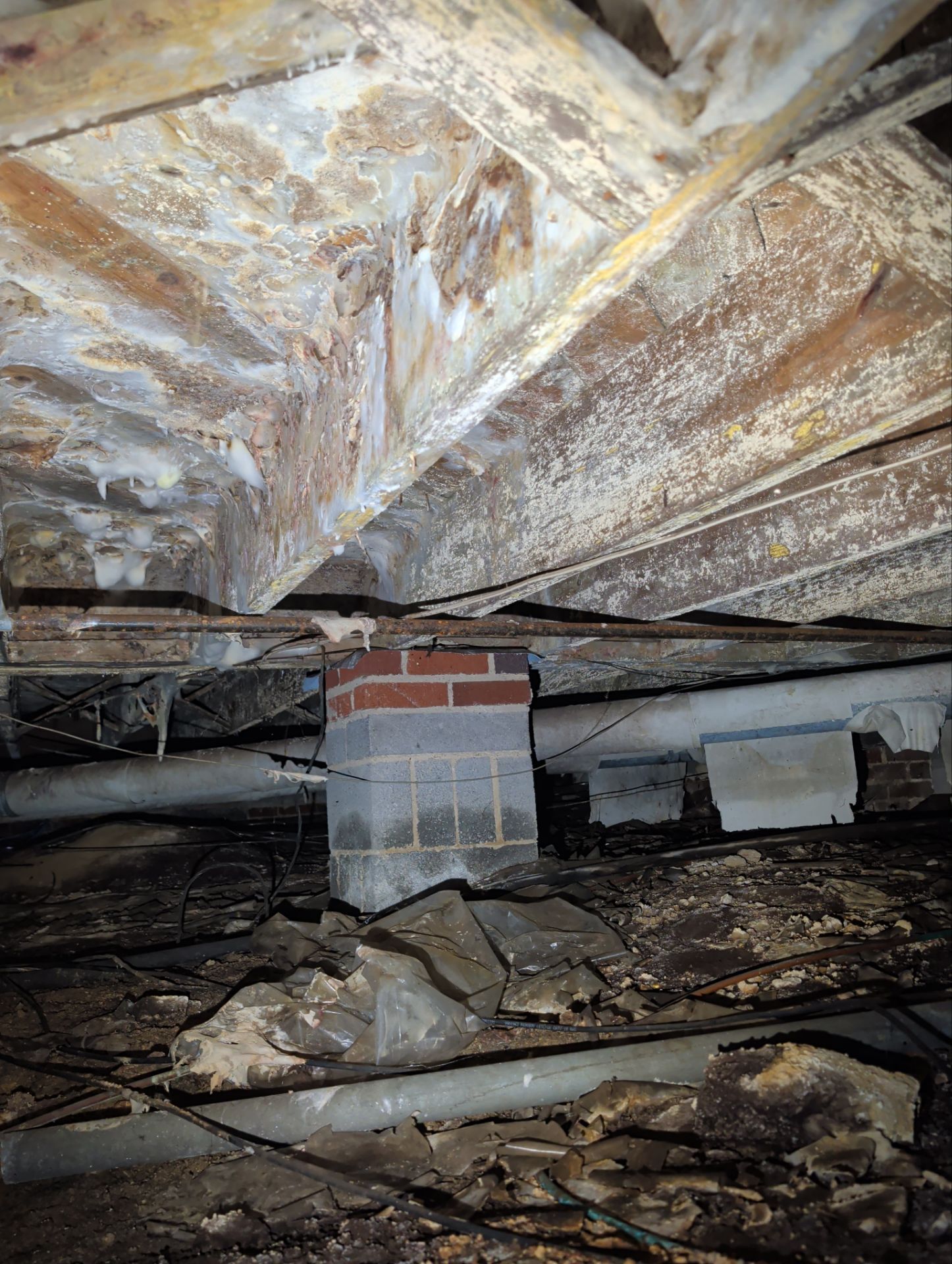
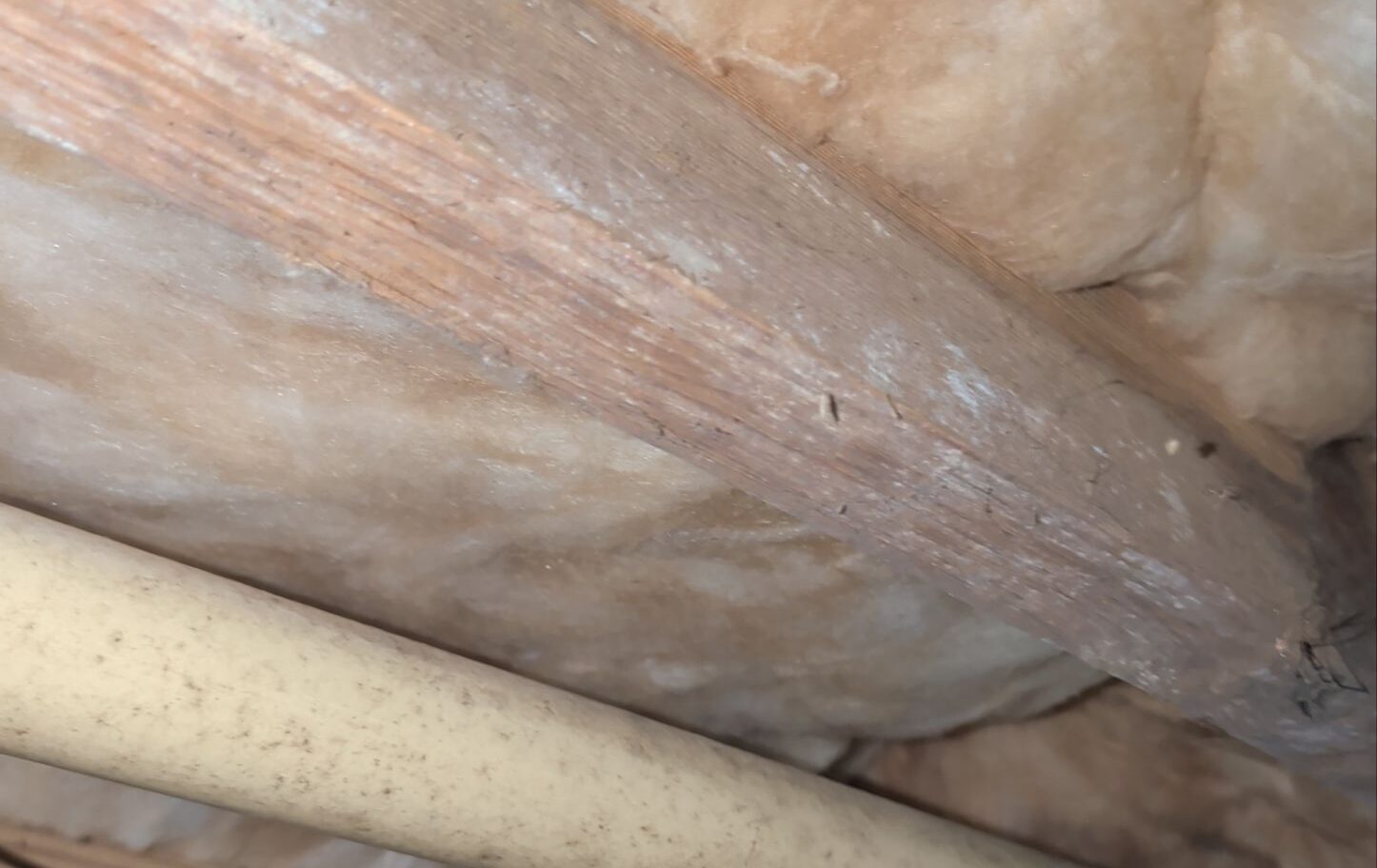
White mold in a crawl space usually shows up as a fuzzy, cottony or powdery coating on wooden joists, beams and subfloor. It grows when the air under your home stays damp for too long. It isn’t always as easy to spot as darker mold, but it still needs attention.
The fix has two parts. The mold needs to be cleaned up properly, and the moisture that feeds it has to be controlled. In this guide, we’ll explain how to tell white mold apart from harmless mineral deposits, what causes it, and what to do next.
What Does White Mold Look Like in a Crawl Space?
White mold is a general name for several types of mold that look white or very light gray. In a crawl space, you’ll usually find it on wood rather than on concrete or block.
Here’s what to look for:
- Fuzzy or cotton-like patches on floor joists, girders or the underside of the subfloor
- A thin, powdery white film that rubs off easily
- Spots that look like they’re spreading in patches or fanning out
- A musty smell, even if the growth is hard to see
White Mold or Efflorescence? How to Tell the Difference
Many homeowners mistake efflorescence for mold. Efflorescence is a white, chalky mineral deposit. It forms when water moves through concrete, block or brick and leaves salts behind as it dries. It isn’t mold, but it does tell you water is getting into the masonry.
Check Where It’s Growing
Efflorescence only forms on masonry, like foundation walls, piers and concrete. Mold can grow on wood, paper, insulation and other organic materials. If the white growth is on a wooden joist, it’s almost certainly not efflorescence.
Check the Texture
Efflorescence is crystal-like or chalky, and it crumbles into powder when you rub it. White mold usually looks fuzzy or soft and may smear instead of crumble.
Try the Water Test
Mineral salts dissolve in water. If you spray a little water on the spot and it starts to dissolve, it’s likely efflorescence. Mold won’t dissolve. Wear gloves and a mask if you try this, and don’t scrub or disturb a large patch.
What Causes White Mold Under a House?
Mold spores are in the air almost everywhere. They only start growing when they find moisture and something to feed on. A crawl space full of wood and damp air gives them both.
High Humidity
The EPA recommends keeping indoor humidity below 60%, and ideally between 30% and 50%. Crawl spaces in North Carolina often run much higher than that in the summer. Warm, humid outdoor air flows in through open vents. When it meets the cooler surfaces under your home, it can leave moisture behind.
Water Getting In
Water from rain, poor drainage or plumbing leaks can soak the soil and raise humidity. Bare dirt floors also release moisture into the air all year long. Sweating air conditioning ducts can drip water, too. Our article on sweating ductwork in your crawl space explains why that happens.
Poor Airflow and No Vapor Barrier
Dead air, crowded storage and a missing or torn vapor barrier all trap moisture. A vapor barrier is a plastic sheet laid over the soil to block ground moisture. When it’s missing or damaged, wood above it stays damp longer.
Is White Mold Dangerous?
White mold is not automatically more or less harmful than other colors. Color alone doesn’t tell you the type of mold. The EPA notes that mold exposure can cause allergy-like symptoms and asthma flare-ups in sensitive people.
Mold on joists is also a sign the wood has stayed damp. Those same damp conditions can lead to wood rot over time. Rot weakens joists and can cause soft or sagging floors. Learn more in our post on sagging floors over a crawl space.
What You Can Safely Check Yourself
You don’t need to go into the crawl space to start gathering clues. Here are a few safe steps:
- Take note of smells. A musty odor in your home, especially in humid weather, can point to mold below.
- Look through the access door. Use a flashlight to scan nearby joists without crawling inside.
- Check the vapor barrier. Look for gaps, tears or exposed dirt.
- Watch for moisture. Note any standing water, damp soil or condensation on pipes and ducts.
- Use a hygrometer. This small, low-cost tool reads humidity. Readings that stay above 60% are a warning sign.
Please avoid scrubbing, sanding or spraying large areas of mold yourself. Disturbing mold can release spores into the air. The EPA suggests that patches larger than about 10 square feet may call for professional help.
Why Bleach Isn’t the Answer
Many people reach for a spray bottle of bleach. Bleach may lighten the surface, but it doesn’t fix the reason the mold is there. If the crawl space stays damp, mold will usually come back. The moisture problem has to be fixed as part of the cleanup.
When to Call a Mold Remediation Pro
It’s a good idea to call a professional if:
- The mold covers a large area or many joists
- It keeps coming back after cleaning
- You see soft, dark or crumbling wood
- You smell mustiness in your home, but can’t find the source
- Someone in your home has asthma, allergies or breathing concerns
A pro can confirm what you’re dealing with, how far it has spread and what’s causing it.
How We Handle White Mold at Walsh
At Walsh, we look at both the mold and the moisture behind it. Cleaning mold without fixing the moisture is a short-term fix. Our approach typically includes:
- A full crawl space inspection to find the mold, check the wood and measure moisture
- Mold remediation to treat and clean affected wood the right way
- Moisture control, such as sealing vents and installing a vapor barrier or full encapsulation
- A crawl space dehumidifier to keep humidity in a healthy range year-round
- Drainage or structural repairs if water or damaged wood is part of the problem
You can learn more about our crawl space mold remediation services and our crawl space encapsulation services.
Frequently Asked Questions
Is white mold in a crawl space common?
Yes, it’s quite common in humid areas like North Carolina. Crawl spaces with open vents and dirt floors are especially prone to it. It often shows up after long stretches of warm, muggy weather.
Can I remove white mold from my crawl space myself?
Small spots can sometimes be cleaned with the right protective gear. But crawl spaces are tight, hard-to-reach spaces, and mold often covers more area than you can see. For larger patches, a professional is the safer choice.
Will a dehumidifier get rid of white mold?
A dehumidifier helps stop new mold from growing by keeping humidity low. It won’t remove mold that’s already there. That still needs to be cleaned up.
How can I tell if the white stuff is efflorescence?
Look at where it is and how it feels. Efflorescence grows on concrete or block, is chalky and dissolves in water. Mold grows on wood and usually looks fuzzy.
Does white mold mean my floor joists are damaged?
Not always. Surface mold doesn’t always mean the wood is weak. But it does mean the wood has been damp, so it’s worth having the joists checked.
Schedule a Crawl Space Inspection With Walsh
If you’ve found white mold in your crawl space, the sooner you deal with it, the better. Our team serves homeowners around Charlotte, Greensboro and Winston-Salem. We’ll show you what we find and walk you through your options.
Schedule your crawl space inspection with Walsh today, and let’s get the moisture under your home under control.