If you’ve looked under your house and found your air conditioning ducts dripping with water, you’re not alone. Sweating ductwork in a crawl space is one of the most common summer problems we see in North Carolina homes. The short answer is simple: cold ducts are meeting warm, humid air, and water condenses on them the same way it forms on a glass of iced tea on the porch.
A little condensation might not sound serious. But when it happens day after day all summer, that water soaks insulation, wets the wood above it, and gives mold a place to grow. Below, we’ll walk through the signs, the causes, what you can safely check yourself, and how we fix it for good.
What Does Sweating Ductwork Look Like?
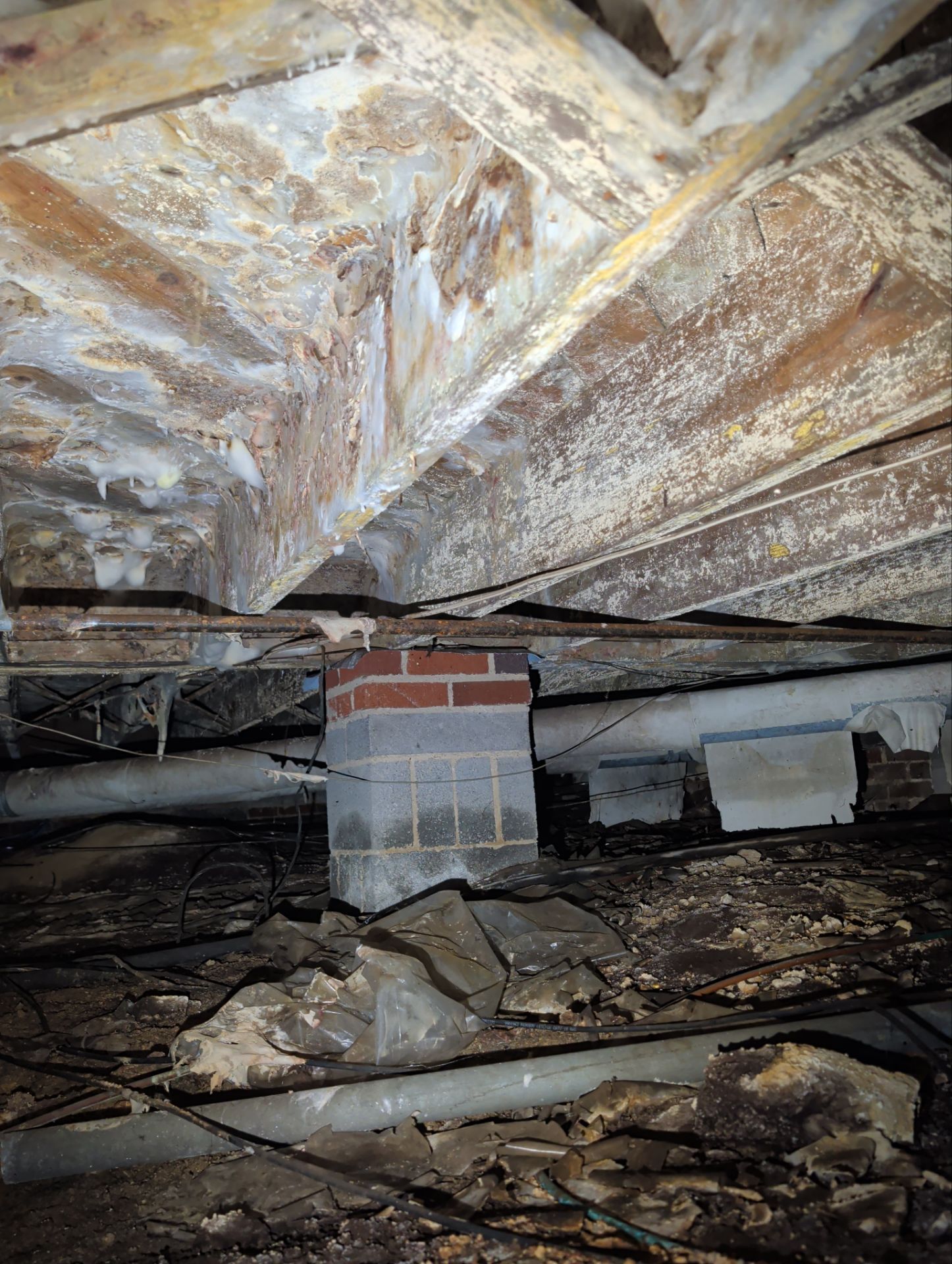
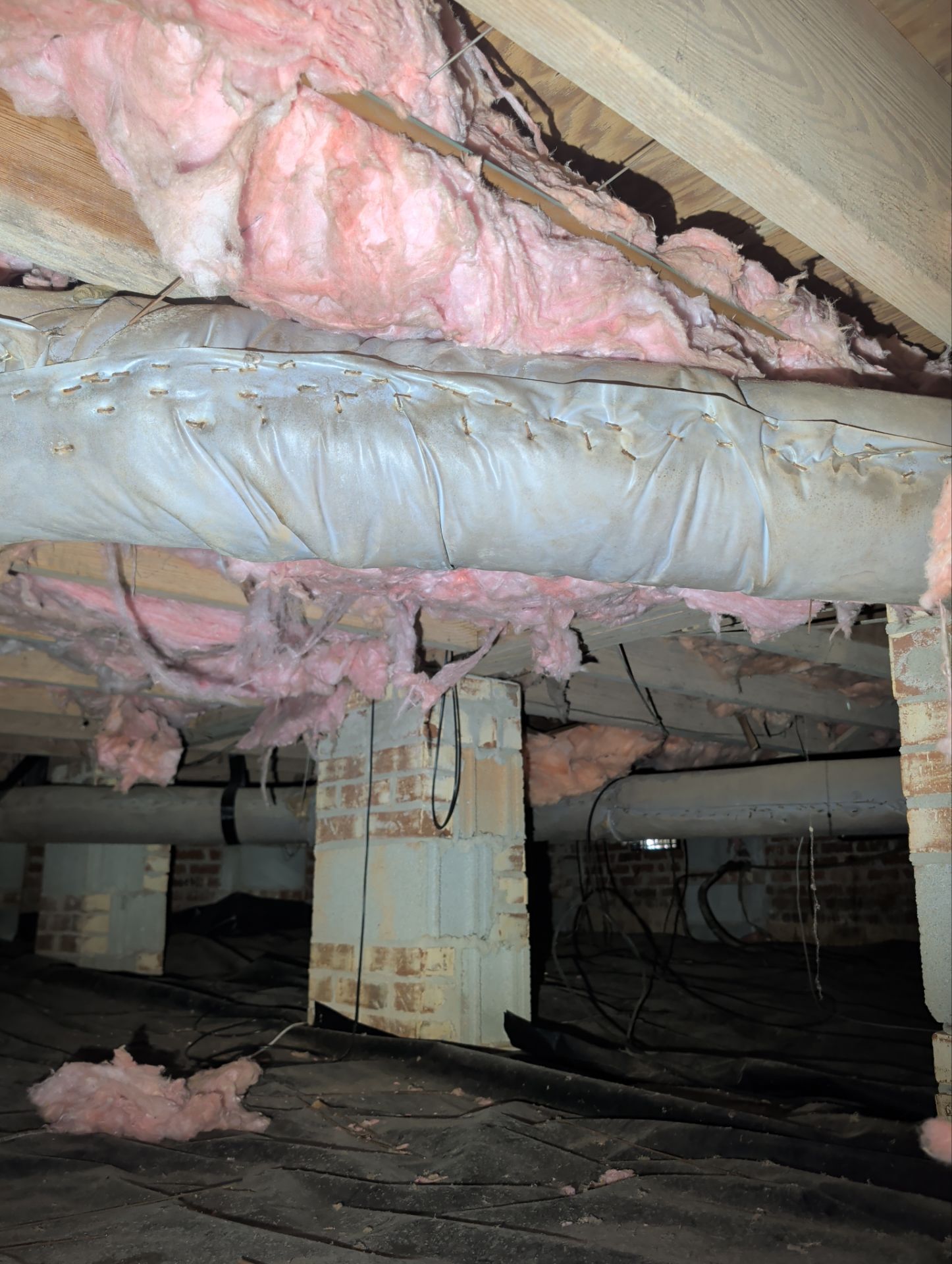
Your ducts are the large metal or flexible tubes that carry cooled air from your HVAC system to the vents in each room. In many NC homes, a lot of that ductwork runs through the crawl space. When it sweats, you’ll usually notice one or more of these signs:
- Beads of water or a wet film on metal ducts, boots or the air handler
- Duct insulation that feels damp, looks dark, or sags and pulls away
- Water dripping onto the vapor barrier or the dirt below
- Puddles or wet spots directly under duct runs
- Rust on metal duct straps, hangers or registers
- A musty smell inside the house, especially when the AC is running
Inside the home, you might also notice floors that feel damp or “sticky” in summer, or a room that never seems to cool well. These clues don’t always mean sweating ducts, but they’re worth a look.
Why Ducts Sweat in North Carolina Crawl Spaces
Condensation happens when warm, moist air touches a surface that is colder than its dew point. The dew point is simply the temperature at which air can’t hold its moisture anymore, so the water turns into droplets. When your AC is running, the air inside your ducts is cool, and the outside of the duct gets cool too.
Humid air coming in through crawl space vents
Many older crawl spaces were built with open vents in the foundation walls. The idea was that outside air would dry the space out. In our hot, sticky summers, it often does the opposite. Building science writers at Energy Vanguard report that summer crawl space humidity often runs between 70% and 90%, and that venting crawl spaces to the outdoors is not a good idea in humid climates.
When that heavy summer air flows in through the vents and hits your cold ducts, it leaves its moisture behind as water.
Moisture rising from the ground
The soil under your house holds a lot of water, especially after the heavy summer storms we get here. Advanced Energy, a Raleigh-based energy organization, notes that duct sweating is often caused by humidity coming up from the crawl space ground or in through the wall vents. If your crawl space has bare dirt, or a thin plastic sheet with gaps and tears, that ground moisture is feeding the problem.
Uninsulated, damaged or leaky ducts
Ducts with missing, torn or soaked insulation get much colder on the outside. Energy Vanguard points out that uninsulated supply boots (the pieces where ducts connect to your floor vents) can drop to around 55–60°F. That is below the dew point most of the summer here.
Leaks in duct seams also matter. Cold air escaping from a leaky joint chills everything around it, including nearby wood and insulation.
The problem is usually seasonal
Most homeowners notice sweating ducts as the weather turns warm and humid, then see it fade in the fall. That pattern is a good clue. It means the issue is tied to the moisture in the air under your house, not just to your HVAC equipment.
Why You Shouldn’t Ignore It
Sweating ducts can seem like a minor nuisance, but the water has to go somewhere. Over a few summers, it can lead to real damage:
- Wet, falling insulation. Soaked fiberglass gets heavy, loses its insulating value and often drops to the ground.
- Mold growth. Energy Vanguard notes that mold growth takes off at around 70% relative humidity. A damp crawl space with wet ducts can easily stay above that level.
- Wood damage. Water dripping onto floor joists and subfloor keeps the wood damp. Floor joists are the horizontal boards that hold up your floor. Over time, constant moisture can lead to rot and soft spots.
- Damaged ductwork. Angi notes that ongoing moisture can damage the ducts themselves and lead to mold.
- Indoor air quality. Air from the crawl space can move up into the living space, which is why a musty smell is such a common sign.
If you’ve already noticed odors upstairs, our article on what causes a musty smell under your house goes into more detail.
What You Can Safely Check Yourself
You don’t need to crawl all the way under your home to learn a lot. If you do go in, wear old clothes, gloves, eye protection and a good mask. Watch for wires, nails, pests and standing water. If anything feels unsafe, stop and call a pro.
Here are a few simple checks:
- Look from the access door with a flashlight. Shine the light along the duct runs. Wet ducts often have a shiny look, and soaked insulation looks dark or saggy.
- Check for drips and wet spots. Look at the ground or vapor barrier directly under the ducts. Puddles in straight lines under duct runs are a strong clue.
- Look at your vents. Are the foundation vents open in summer? That’s a common source of the humid air.
- Check the ground cover. Is the dirt bare, or is there a plastic vapor barrier? If there is one, look for gaps, tears or sections that don’t reach the walls.
- Try a humidity reading. An inexpensive digital hygrometer (a small humidity meter) left near the access door for a day can tell you a lot. Readings that stay high in summer point to a moisture problem.
Avoid pulling down insulation or poking at the ducts yourself. Wet insulation can hide mold, and damaged ducts are easy to make worse.
Quick Fixes That Help (and Their Limits)
Some steps can ease the problem for now. Your HVAC technician can check that your system’s fan speed and refrigerant charge are set correctly, which Advanced Energy suggests reviewing. Sealing duct leaks with mastic and re-wrapping bare ducts with proper insulation can also help.
These fixes are worth doing, but they don’t remove the moisture source. Angi describes a dehumidifier on its own as a temporary fix. If humid air keeps flowing in through vents and moisture keeps rising from the ground, the ducts will keep fighting the same battle every summer.
When to Call a Pro
It’s time to have your crawl space looked at if you notice any of these:
- Water dripping from ducts or puddles under them
- Insulation hanging down or lying on the ground
- Visible mold on wood, ducts or insulation
- Soft, stained or dark wood on joists or the subfloor
- A musty smell that keeps coming back
- Sweating that returns every summer even after duct repairs
At that point, the problem is bigger than the ducts. It’s the environment under your house.
How We Fix Sweating Ductwork at Walsh
At Walsh, we start with a full crawl space inspection. We look at the ducts, the insulation, the wood framing, the vents, the ground cover and any signs of water coming in. Then we explain what we found in plain language and talk through your options.
For most homes, the lasting fix is to control the moisture in the crawl space itself. Depending on what we find, that may include:
- Sealing the crawl space vents so humid outside air can’t flow in. You can learn more in our guide to crawl space vent sealing.
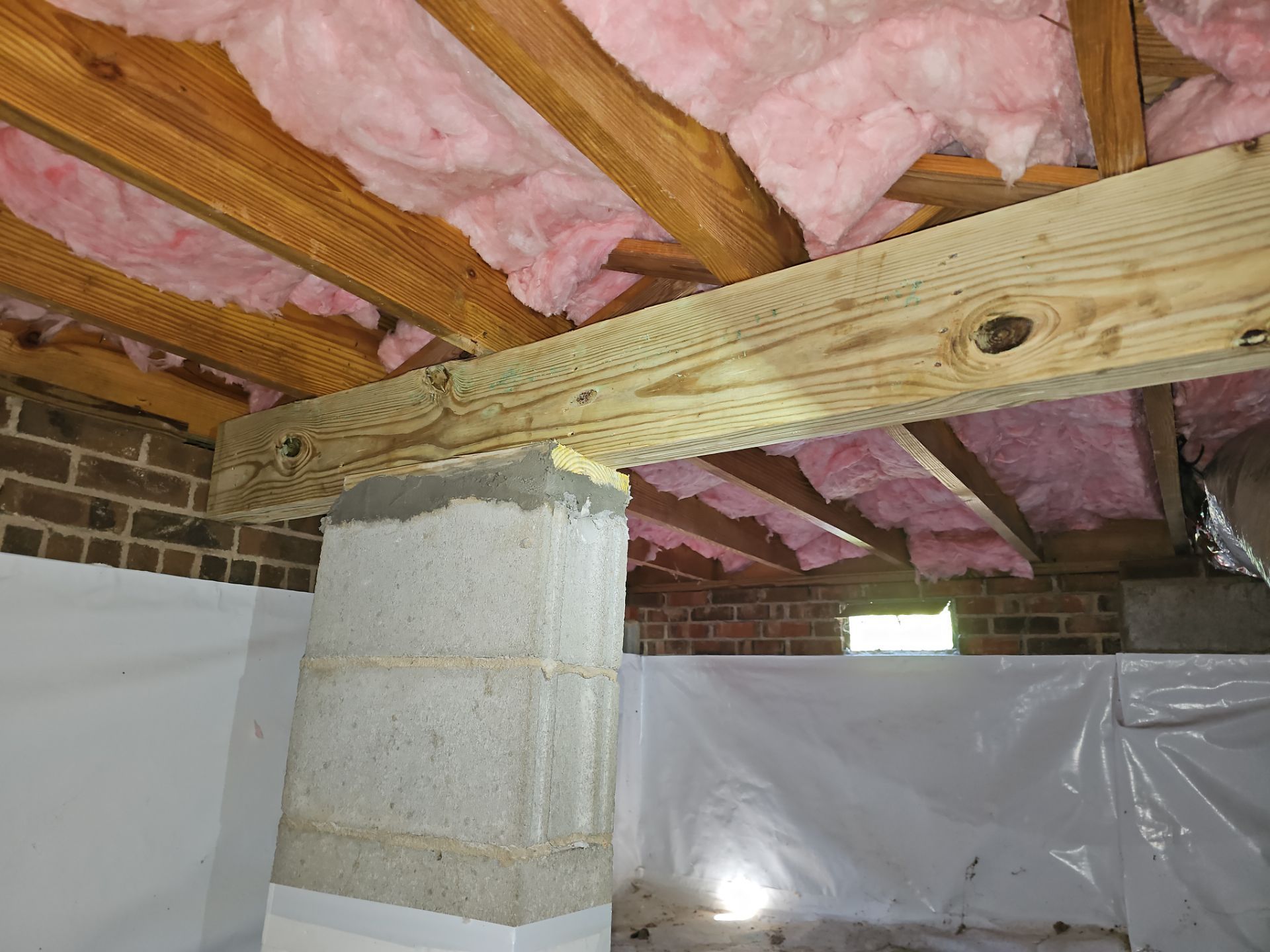
- Installing a heavy-duty vapor barrier over the ground and up the walls. Advanced Energy recommends a 6-mil or thicker polyethylene barrier that covers 100% of the floor and runs at least 6 inches up the walls and piers.
- Full crawl space encapsulation, which seals the floor, walls and vents into one closed system. See our crawl space encapsulation service for how it works.
- A crawl space dehumidifier to keep humidity in a healthy range once the space is sealed. Our dehumidifier installation page explains more.
- Drainage or waterproofing if water is getting in during heavy rain.
We’ll also point out duct issues we see, such as torn insulation or disconnected runs, so you can have your HVAC contractor address them.
Frequently Asked Questions
Is it normal for ductwork in a crawl space to sweat?
It’s common, but it isn’t healthy for your home. A dry, well-sealed crawl space shouldn’t have water forming on the ducts. Regular sweating is a sign that too much humid air is getting under your house.
Will closing my crawl space vents stop the sweating?
Closing vents can help, but it isn’t a complete fix by itself. Moisture can still rise from the ground. Vents are usually sealed as part of a larger plan that includes a vapor barrier and, often, a dehumidifier.
Can I just add more insulation to the ducts?
Better duct insulation and sealed seams can reduce sweating. But if the crawl space stays very humid, wet air can still reach cold spots and damage the insulation over time. It works best alongside moisture control.
Why does it only happen in the summer?
Summer is when your AC makes the ducts cold and the outside air is hot and humid. That combination creates the most condensation. In winter, the ducts carry warm air, so they rarely sweat.
Is sweating ductwork a sign of mold?
Not always, but it creates the damp conditions mold likes. If you see fuzzy growth or notice a musty smell, it’s a good idea to have the crawl space inspected.
Schedule a Crawl Space Inspection
If your ducts are dripping, your insulation is falling, or your house smells musty every summer, we’d be glad to take a look. At Walsh Crawl Space and Structural Repair, we help homeowners around Charlotte, Greensboro and Winston-Salem keep their crawl spaces dry and healthy.
Schedule your crawl space inspection today, and we’ll show you exactly what’s happening under your home and how to fix it.